Commissio
Project overview
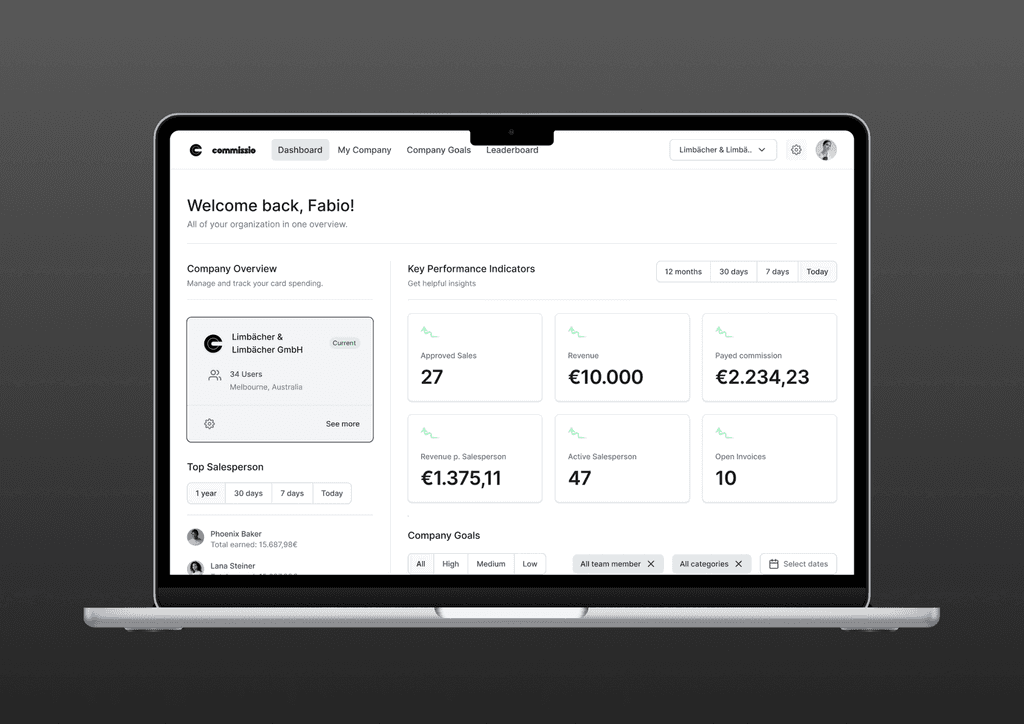
Commissio is a web application developed for Limbächer & Limbächer to simplify commission management. The tool enables administrators to track sales performance, assign commissions and set individual targets for employees – all in one centralized platform.
Role
UX/UI Designer
UX/UI Design, Interaction Design
Background
Germany’s largest motorcycle dealer, Limbächer & Limbächer, wanted to digitize their sales process and manage both sales and salesperson commissions. Since their team works on a commission basis, they partnered with The NEED GmbH to develop a solution that could later be adapted for other companies as well. The initial version, however, was designed for Limbächer to be tested and refined within their own organization first.
Understanding the problem
The project began when Fabio Limbächer, member of the executive board for Limbächer & Limbächer, approached us with the challenge of losing track of sales and commissions due to extensive paperwork and manual processes. The lack of a centralized system made it difficult to maintain transparency and efficiency across the sales team. In addition, he told us that employees often had to wait long periods for their submitted sales to be processed and for commissions to be paid out.
Product vision and solution
The goal was to create a digital tool that would bring clarity to the sales process, automate commission tracking and make workflows faster and more transparent for both management and employees. The envisioned solution, later named Commissio, was designed to centralize all sales and commission data in one place.
The concept focused on simplifying complex administrative processes through clear information architecture and intuitive user flows. Sales data could be entered, tracked and approved directly in the application, while commissions were automatically calculated based on predefined rules. This not only reduced manual work but also established a foundation for a scalable solution that could later be customized for other companies.
Designs
After everything was communicated by Fabio Limbächer, my boss and me got to work on this together to develop a concept for solving the problem.
Organizing the designs
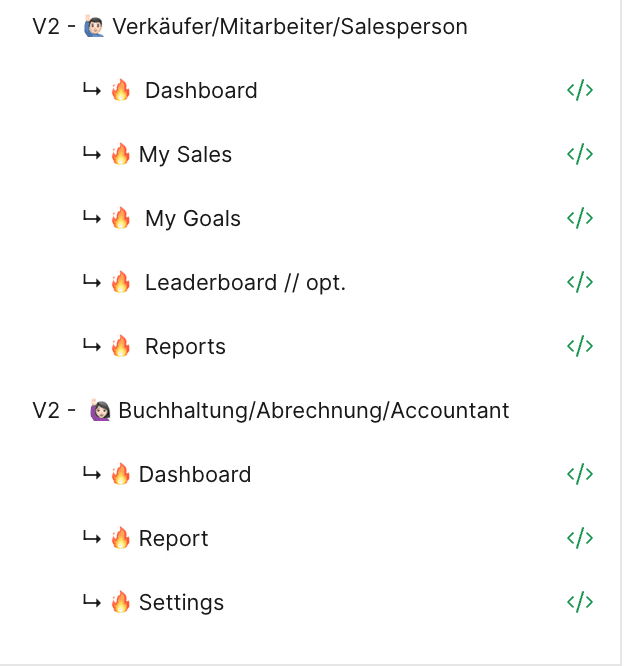
To maintain an overview of which screens were designed for each role, they were divided into three sections. Within the sections, individual pages were created for the respective functions.

Login and register
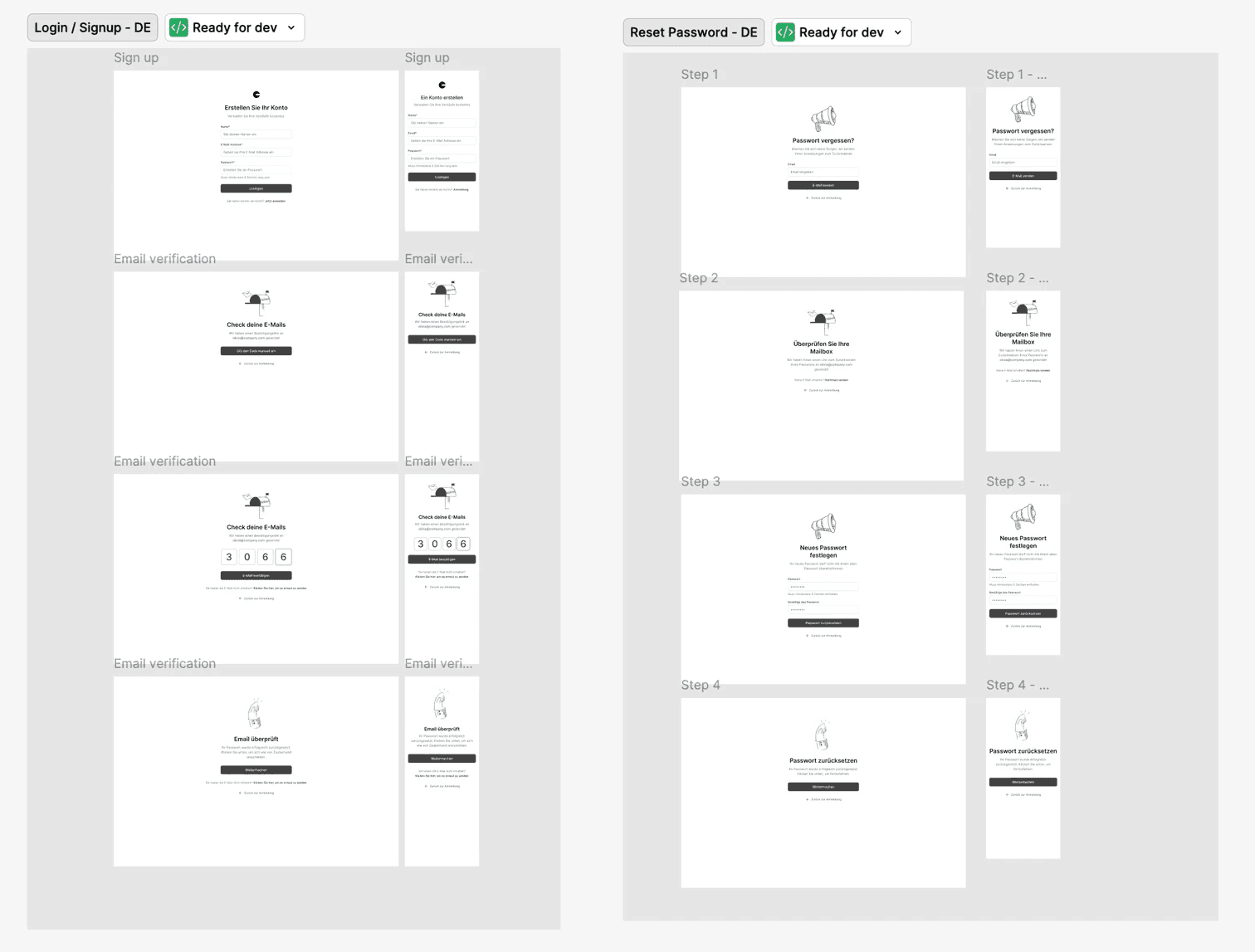
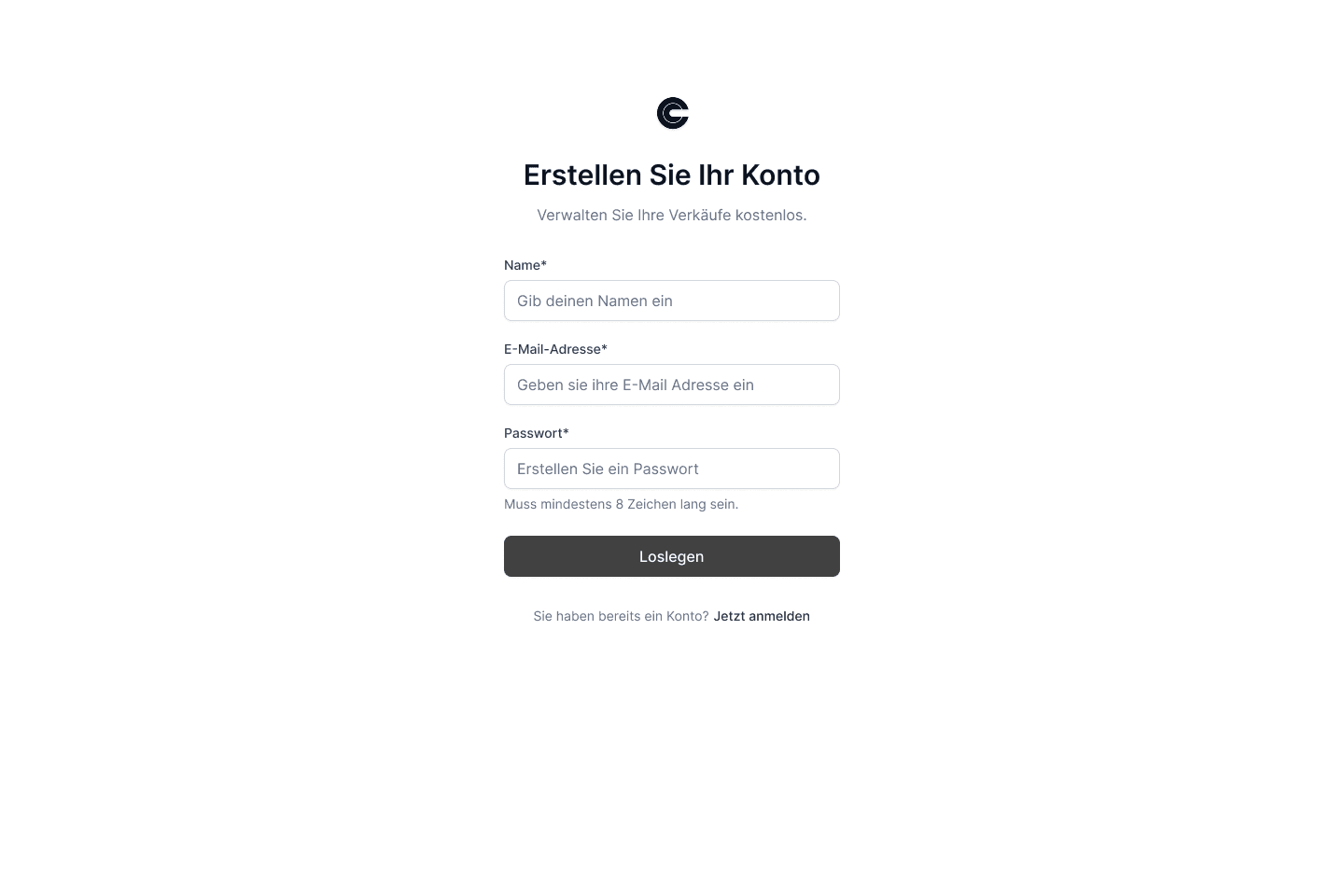
Since an account is very needed for this application, the whole login process was quickly designed and laid out.
Salesperson
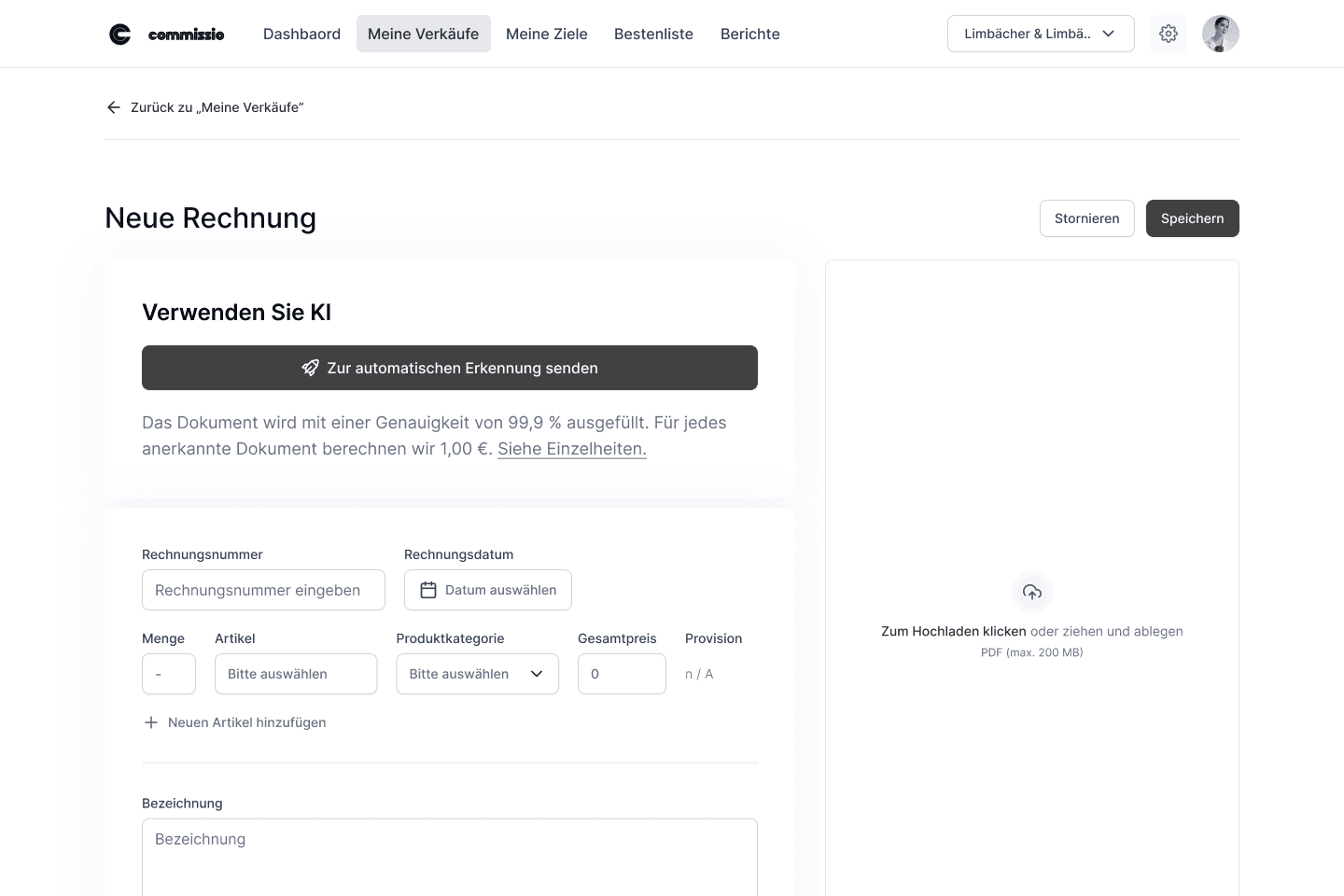
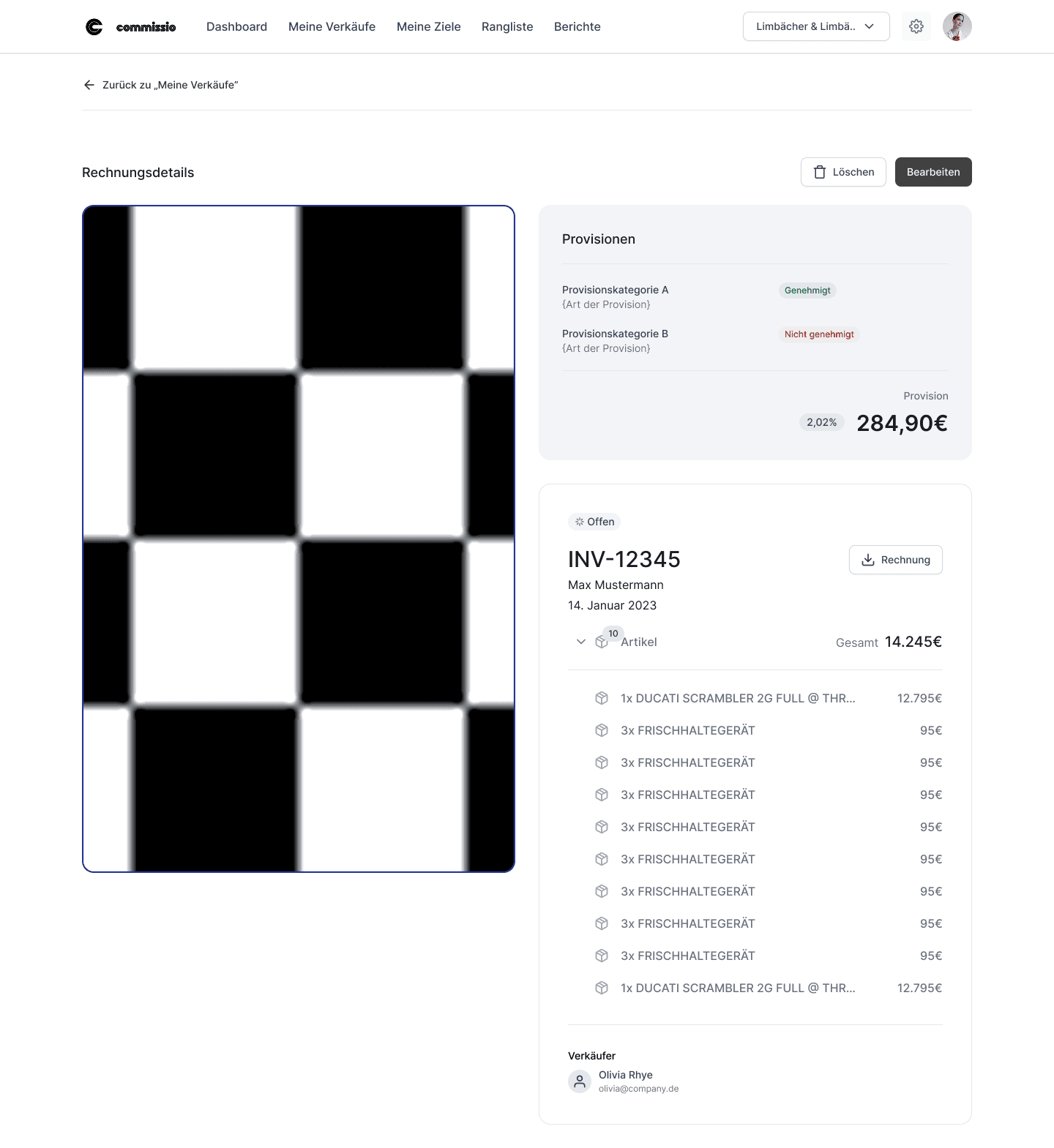
For the sales team, a dedicated dashboard was designed to give them a clear overview of their performance. The main feature for salespersons is the ability to add new sales in order to receive commissions. They can upload an invoice and either let an AI automatically extract all necessary information or fill it in manually. Once submitted, the entry is sent to the accountant for review, where the commission is either approved or rejected.
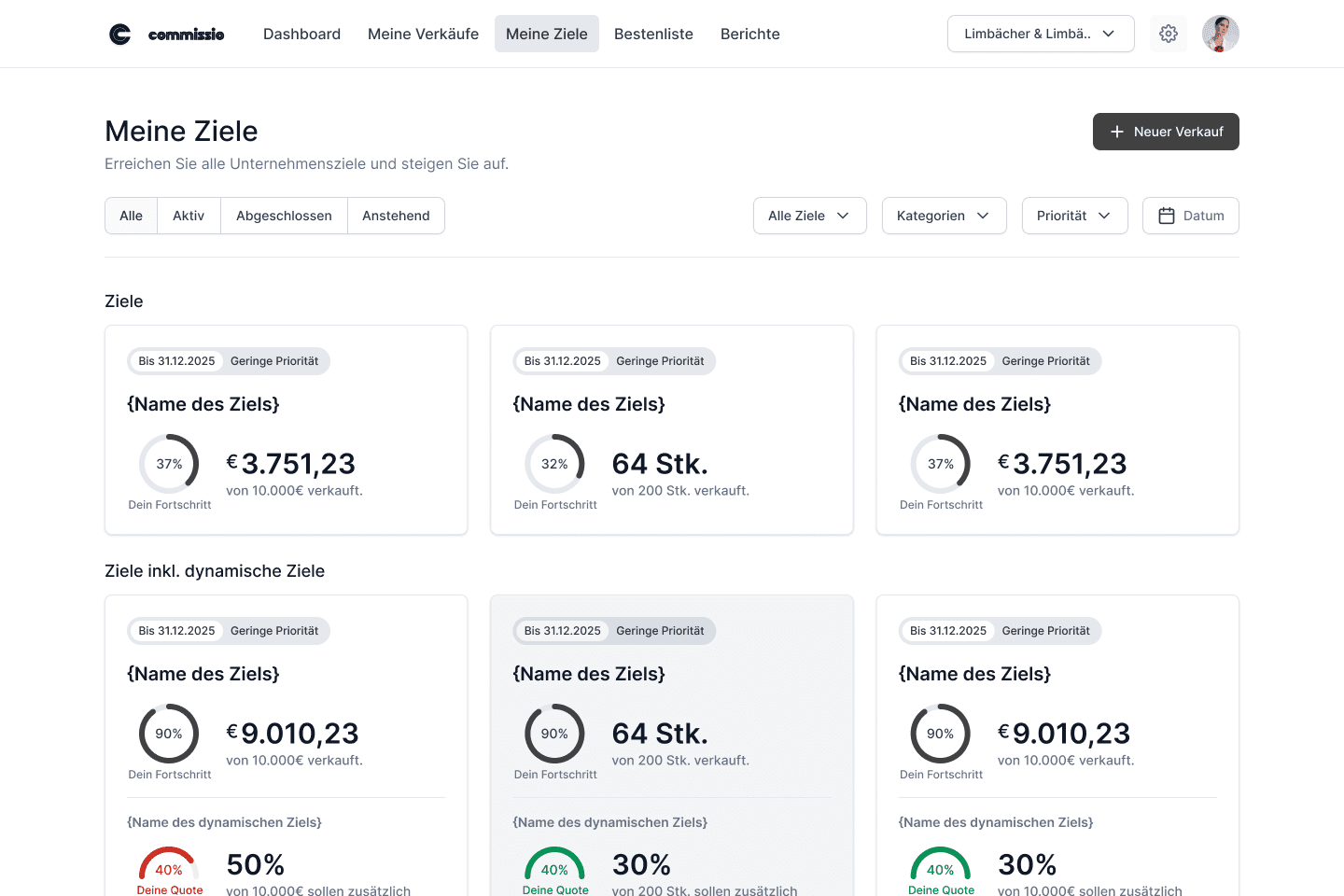
Additionally, salespersons can be assigned specific targets by the admins. Upon achieving these goals, they receive extra rewards as an incentive.

Accountant
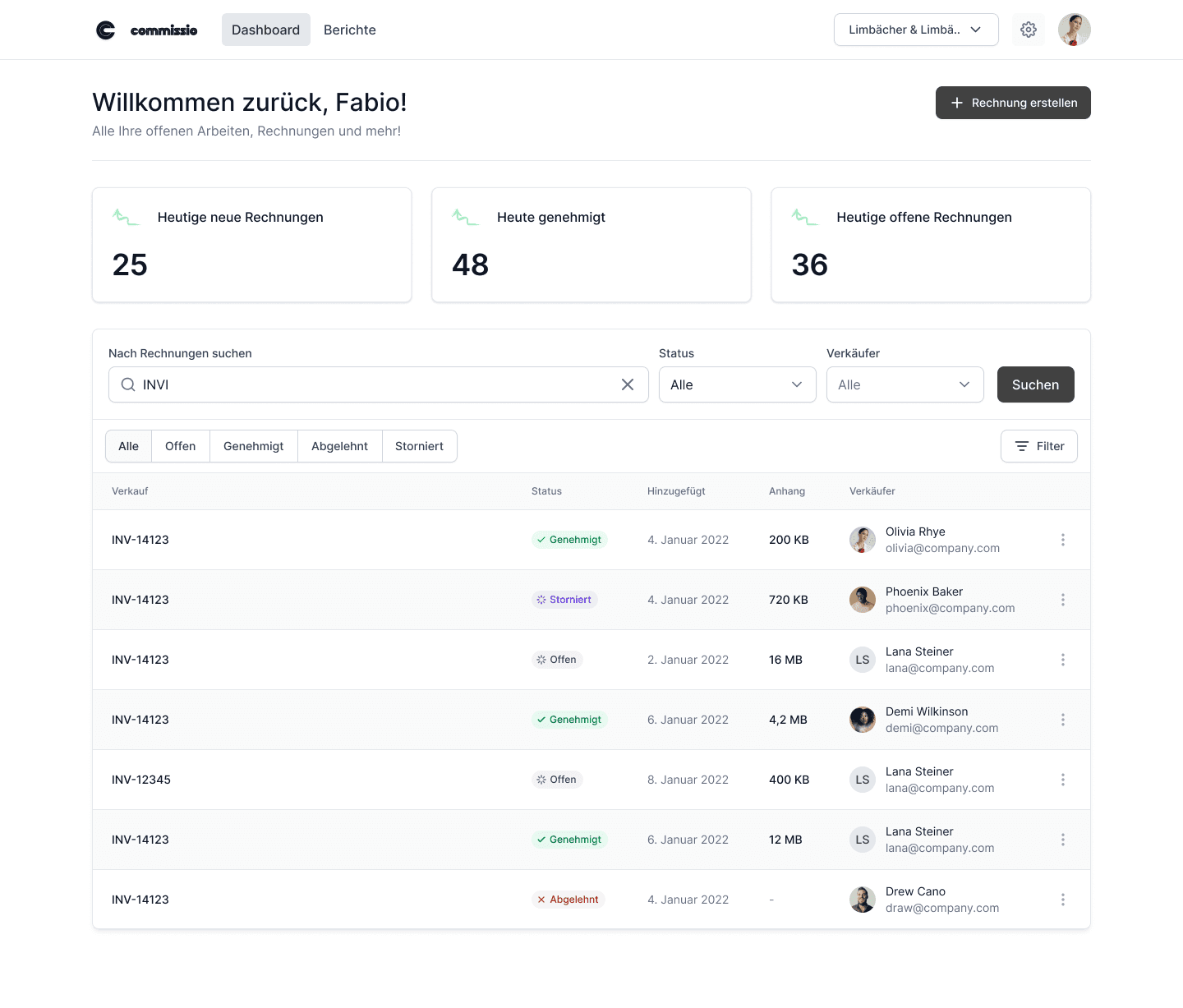
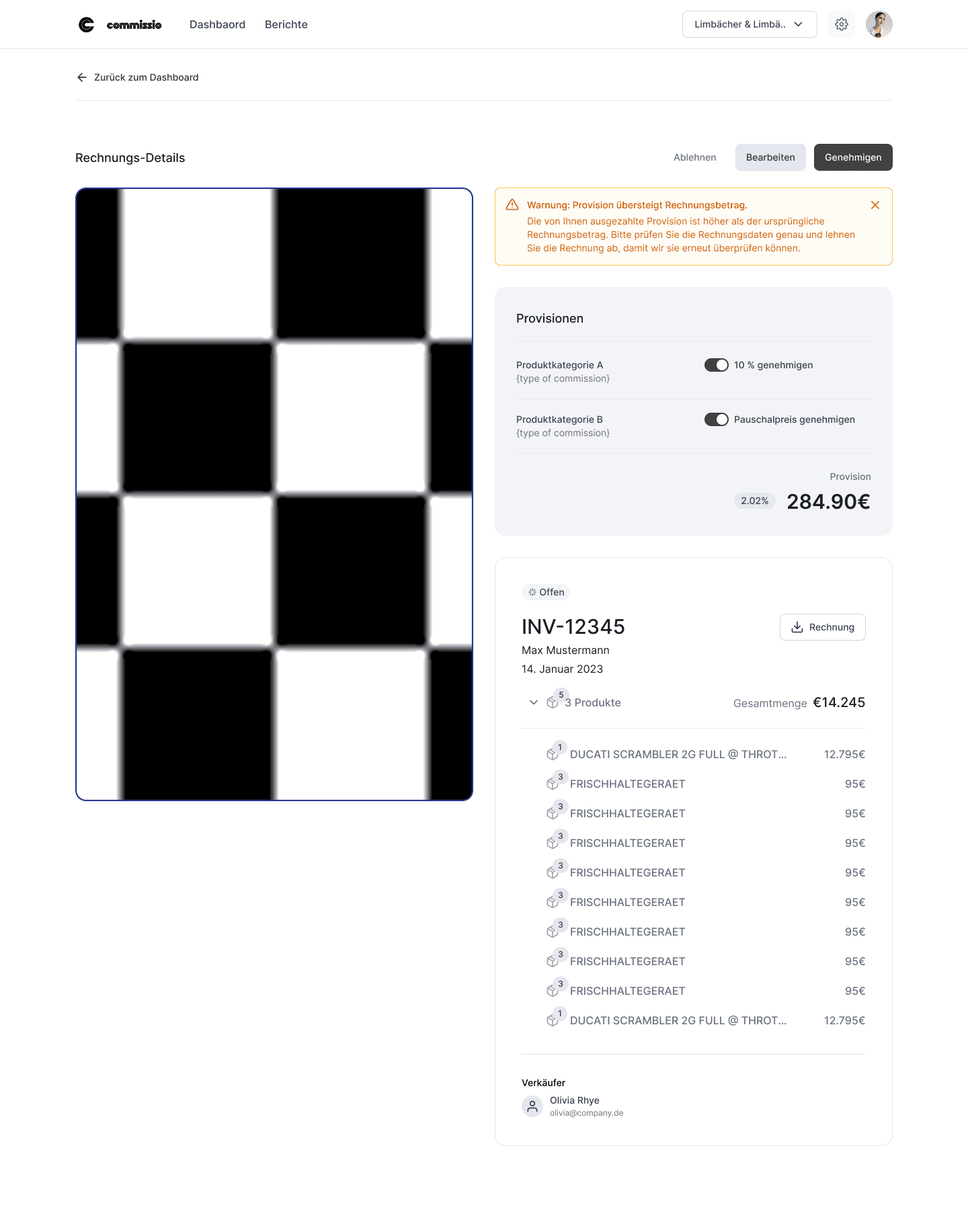
Accountants have their own dashboard where, in addition to some key statistics, they can view all incoming sales submitted by the sales team. From there, they can approve or reject entries if any information has been entered incorrectly.
Admin
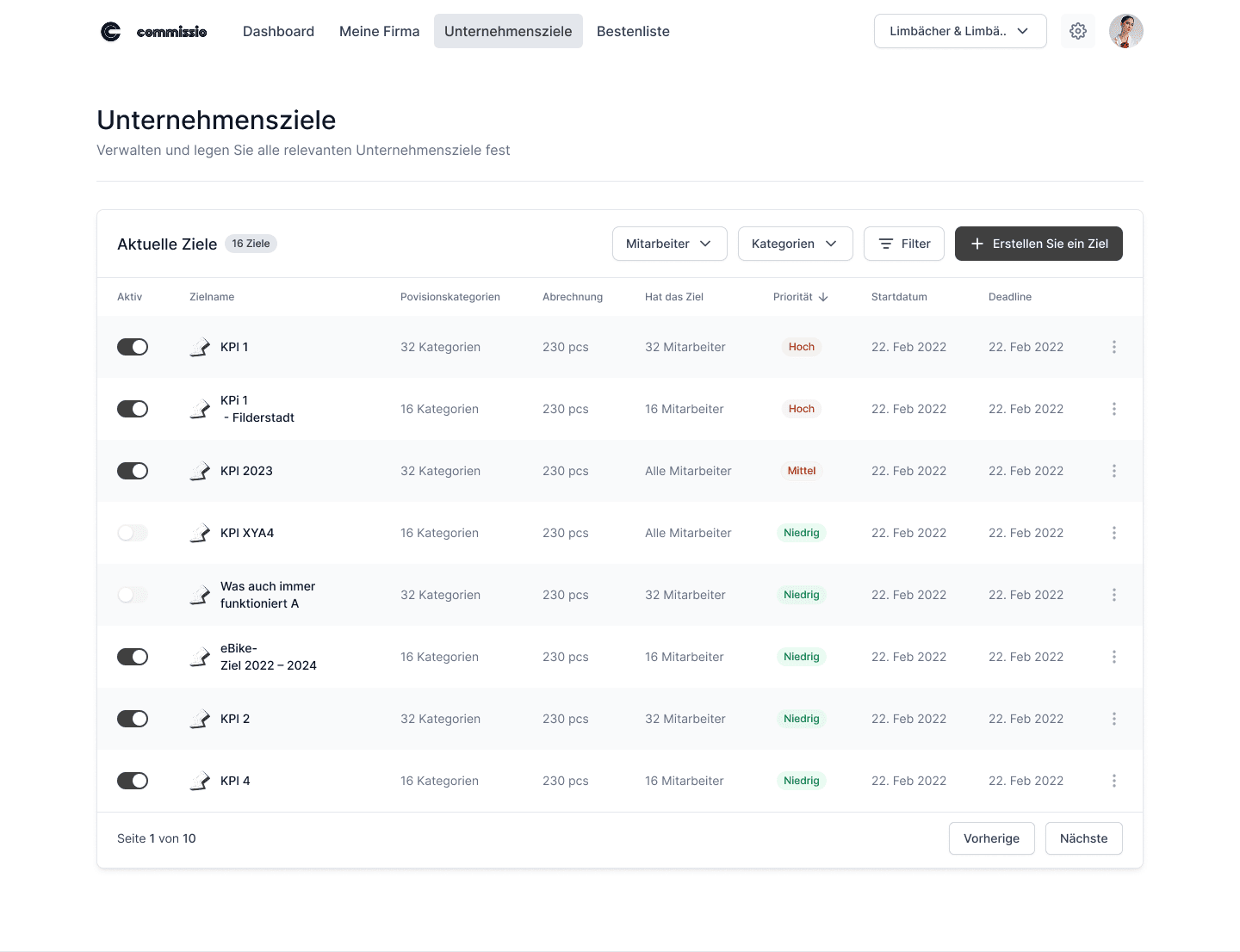
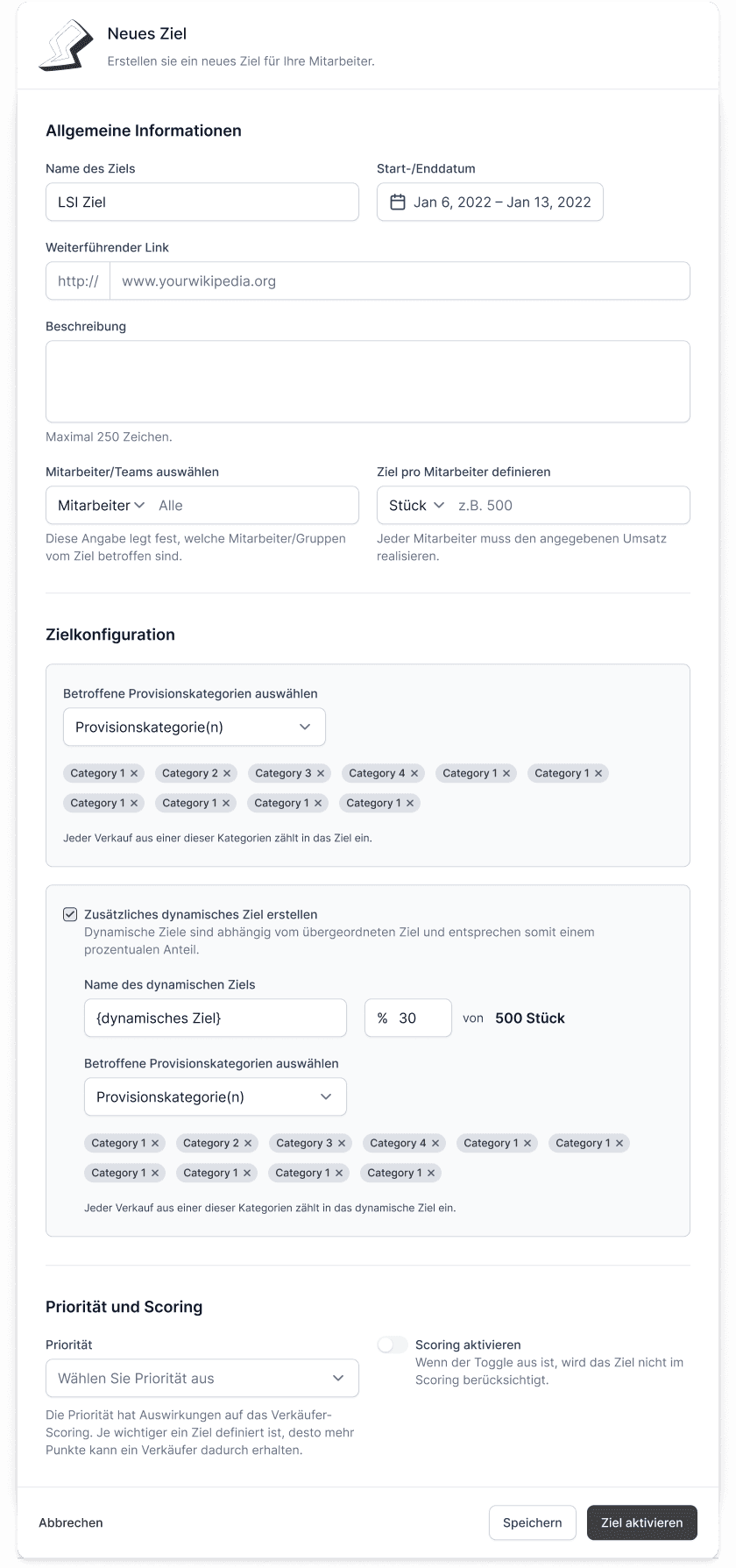
Admins have full access rights and can view key company metrics as well as invite new members to join as admins, salespersons or accountants. They can also define company-wide goals and assign them to specific salespersons to motivate performance and track progress.


Results and takeaways
The development of Commissio resulted in a digital solution that significantly improved transparency and efficiency within the sales process. Fabio gave us the feedback that managers gained a clear overview of ongoing sales and commissions, while employees were able to track their own progress and payouts in real time. The tool replaced time-consuming manual processes with an automated, user-friendly system that reduced administrative work and built greater trust within the sales team.
Some key takeaways from this project are:
Understanding real workflows is crucial. Translating business processes into a digital environment requires a deep understanding of how people actually work — not just how the process looks on paper.
Presenting to key stakeholders. This project gave me my first experience in presenting design decisions to key stakeholders, such as Fabio Limbächer, and learning how to argue for or against certain design choices based on user and business needs